



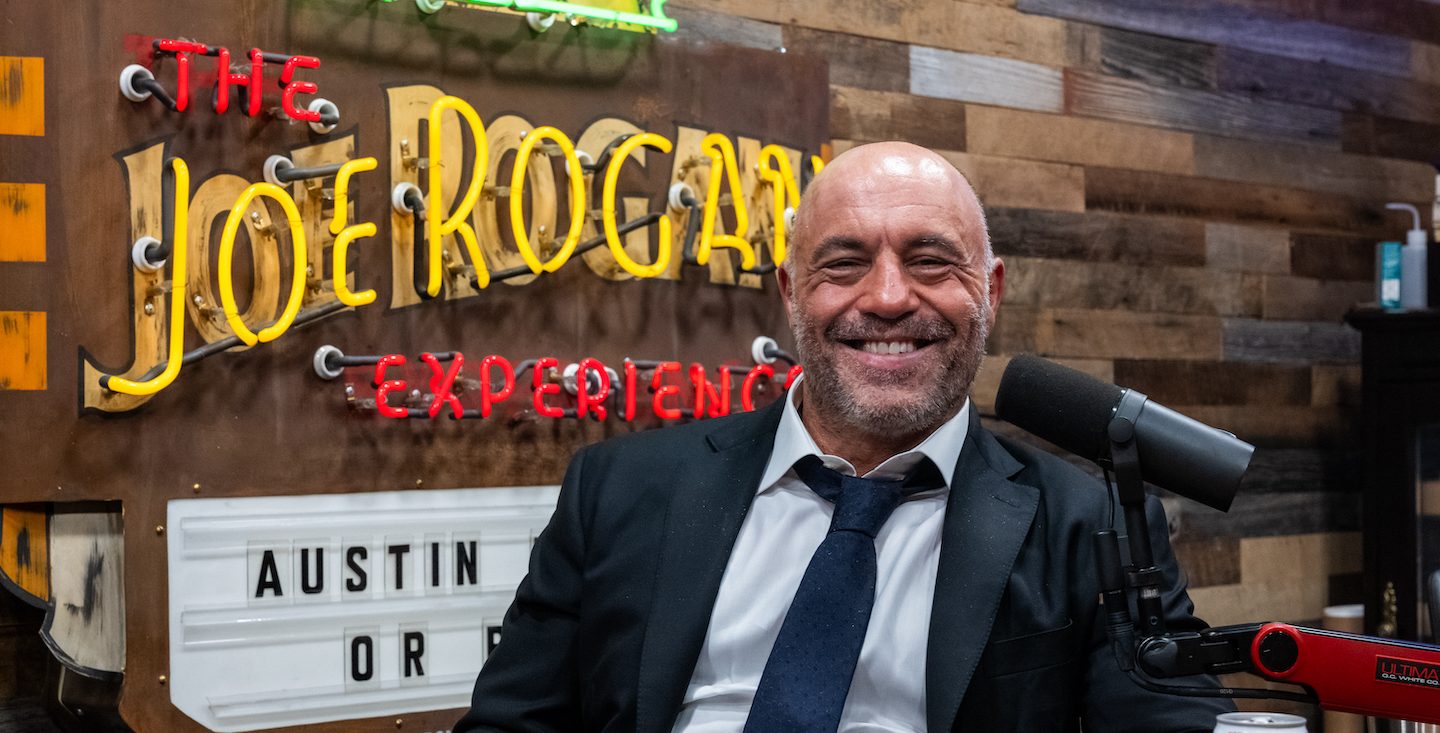
How Joe Rogan Created the Modern Podcast
By The Avenue Wire
Long before podcasts became a pillar of modern media, Joe Rogan was simply recording long conversations with friends—no script, no agenda, no clock. What started as an experiment quietly became the blueprint for how millions of people now consume media.

Bold take but it is safe to say that Joe Rogan didn’t just build a popular show.
He helped create the modern podcast format itself.
Before Rogan: Podcasts Had Rules
I seem to rememebr In the mid-2000s, podcasts were mostly:
-
Short (20–45 minutes) -
Highly edited -
Topic-specific -
Structured like radio shows
They felt like boring audio blogs.

The assumption was simple:
People don’t have the attention span for long-form talk.
Joe Rogan would prove that assumption wrong.
The Origin: Conversations, Not Content
When The Joe Rogan Experience launched in 2009, it wasn’t designed as a media product. Rogan was already a stand-up comic, UFC commentator, and TV personality—but the podcast wasn’t about expanding his brand.

It was about:
-
Talking freely -
Exploring ideas in real time -
Letting conversations breathe
No segments.
No forced conclusions.
No “radio voice.”

Just curiosity.
What Came First: Authenticity
Joe Rogan didn’t approach podcasting like a format problem to solve. He treated it like a room to sit in. The conversations weren’t engineered to land anywhere specific. They moved the way real discussions move—forward, sideways, sometimes nowhere at all. That looseness wasn’t accidental. It was the point.

Nothing felt timed. Nothing felt trimmed for effect. People talked until they ran out of things to say, not until a segment ended. You could hear pauses. You could hear uncertainty. You could hear people thinking, sometimes in circles.

That texture mattered more than structure. Over time, listeners adjusted to it. Long conversations stopped feeling indulgent and started feeling normal. Shorter ones didn’t disappear, but they began to feel like excerpts instead of the main event.

What emerged wasn’t a cleaner version of audio media. It was a slower one. One that assumed attention instead of competing for it.

That assumption is what stuck.
The Long-Form Revolution
By ignoring time limits, Rogan unlocked a new format:
-
Scientists could explain complexity -
Artists could tell full stories -
Controversial guests could speak uninterrupted -
Nuance had space to exist
This changed audience behavior. People didn’t just listen while commuting—they planned time around episodes.

The modern podcast became:
A place for thinking, not reacting.
Decentralizing Media Power
Rogan also demonstrated something radical:
You didn’t need a network to reach millions.

With:
-
Minimal production -
Direct distribution -
Platform independence (at the time)
He showed creators that ownership of audience mattered more than distribution deals.

This insight would later reshape creator economics across YouTube, Substack, and independent media.
Spotify Didn’t Create the Model — They Validated It
When Spotify signed Rogan to a reported $100M+ deal, it didn’t create the modern podcast era.

It confirmed it.

The deal proved that:
-
Long-form conversation had massive value -
Independent voices could rival legacy media -
Podcasts weren’t “new radio”—they were something else entirely
After Rogan, everyone wanted:
-
Longer episodes -
Fewer interruptions -
More authenticity
The Blueprint Rogan Left Behind
Today’s top podcasts—from business to culture to politics—follow the structure Rogan normalized:
-
Minimal editing -
Open dialogue -
Human pacing -
Depth over headlines
Whether people agree with him or not is irrelevant.

The format won.
The Avenue Wire Takeaway
Joe Rogan didn’t invent podcasting. That part is obvious.
What he did was change how people were willing to listen.
He treated the audience like adults. He assumed they could sit with an idea longer than a headline, follow a thought without being rushed, and handle uncertainty without needing it wrapped up neatly at the end.
The conversations didn’t have a clock hanging over them. If something needed another hour, it got another hour. If a guest needed time to work through an idea, the space was there.
That changed expectations.
Once people experienced conversations that weren’t edited for speed or shaped for reaction, shorter formats started to feel thin. Not wrong — just incomplete.
The modern podcast grew out of that shift. Not because it was louder or more polished, but because it felt more honest. You could hear people thinking. You could hear them change their minds. You could hear the gaps.
That’s what stuck.
Podcasting didn’t become more perfect.
It became more human.
And that’s the part Rogan helped normalize — whether people like him or not.

Nora Becker
September 1, 2015 at 2:41 pmThanks for sharing your ideas in such a straight forward way. Your work is so appreciated worldwide!
Martin Saward
September 1, 2015 at 2:42 pmReally inspirational read, thank you!
Carol Thorn
September 1, 2015 at 2:42 pmAdorably charming! You have an amazing eye for beauty – these photos are so pretty!
admin
September 1, 2015 at 2:58 pmThanks on those nice words, we really appreciate it.