Creative Cuisine: How Massimo Bottura Turned Food Into Culture
The Opening
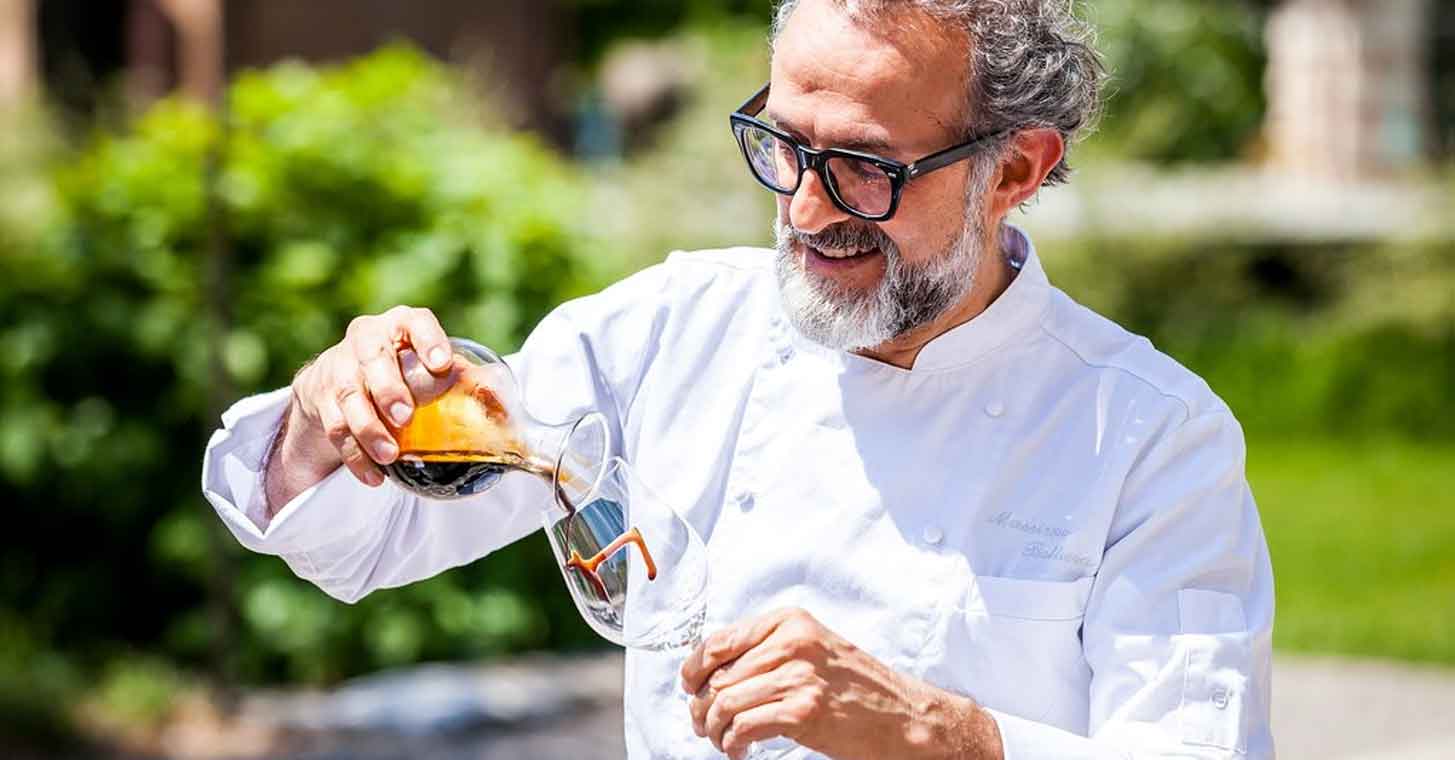
For many chefs, food begins with tradition. For Massimo Bottura, it begins with a long lasting memory.

Raised on the bold and rich flavors of Emilia-Romagna, Bottura learned early that cuisine was never just about technique. It was about emotion, context, and storytelling. That understanding would later push him to challenge the rigid expectations of Italian cooking—not by rejecting history, but by interrogating it.

Rather than preserving recipes as untouchable artifacts, Bottura treated them as living ideas. He deconstructed classics, reframed imperfections, and found beauty where others saw mistakes. A cracked tart. A burnt edge. A forgotten ingredient. Each became a way to reflect on time, place, and human experience.

In his kitchen, food became a language—one capable of carrying meaning far beyond the plate.
Intention Over Provocation
What set Bottura apart was never provocation for its own sake. It was the intention.

Every dish carried a point of view. Every menu told a story rooted in culture, responsibility, and imagination. Cooking, in his hands, evolved into a form of authorship—one that invited guests to slow down, engage, and remember.

His influence soon extended far beyond fine dining. Bottura helped redefine what it meant to be a creative chef in the modern world—someone who understands food as culture, hospitality as dialogue, and the kitchen as a platform for ideas.
A Kitchen Shaped by Movement
Travel has always played a quiet role in Bottura’s evolution.

Moving between cities, cultures, and kitchens allowed him to absorb ideas without losing his center. Each place added texture to his thinking—new techniques, unfamiliar ingredients, different rhythms of life—all folded back into his work with restraint and respect.

Rather than chasing trends, he listened. He observed how people ate, gathered, and celebrated. Those moments informed dishes that felt grounded yet unexpected—global in perspective, but deeply personal in execution.

In an industry often driven by spectacle, Bottura’s work is a reminder that innovation doesn’t need to shout. Sometimes it arrives quietly, layered with meaning, and lingers long after the table has been cleared.
Looking Forward
Today, Bottura’s legacy isn’t defined solely by accolades or restaurants. It’s defined by a broader shift in how food is understood.

He helped move cuisine out of rigid tradition and into the realm of culture—where memory, creativity, and responsibility intersect. In a world moving faster than ever, his approach offers a quiet counterpoint.

Food, when treated with care and intention, can slow time. It can tell stories. And in the right hands, it can remind us that creativity is most powerful when it’s rooted in humanity.




Nora Becker
September 8, 2015 at 9:59 amThanks for sharing your ideas in such a straight forward way. Your work is so appreciated worldwide!
Martin Saward
September 8, 2015 at 9:59 amReally inspirational read, thank you!
Carol Thorn
September 8, 2015 at 10:04 amAdorably charming! You have an amazing eye for beauty – these photos are so pretty!
admin
September 8, 2015 at 10:06 amThanks on those nice words, we really appreciate it.