



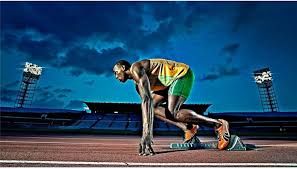
Usain Bolt, Puma, and Creative Dominance
Speed Is Nothing Without the Story: How Usain Bolt Became a Brand—and How Puma Ran With It
Calling someone the fastest man in the world sounds impressive—until you realize how fragile that title really is.

Speed only matters if it lasts. Records only matter if they hold. And dominance only means something if it’s repeated, witnessed, and believed.

That’s where Usain Bolt’s true marketing power lived—not just in how fast he ran, but in how rarely he lost.
Dominance Is the Ultimate Marketing Strategy
If Bolt had been fast but inconsistent—winning one race, losing the next—the title would’ve collapsed under its own weight. “Fastest man in the world” doesn’t survive constant defeat. It becomes noise.

Bolt understood this instinctively. His brand wasn’t built on speed alone, but on certainty.

When Bolt stepped onto the track, the question wasn’t who might win?
It was how far ahead will he finish?

That predictability is gold in marketing. Consistency builds trust. Trust builds myth.
The Power of Timing (On and Off the Track)
Bolt won moments.
He looked at the camera.
He smiled before the finish line.
He celebrated before the result was official.
Those weren’t accidents. They were signals.
He made speed look effortless, joyful, and inevitable. That confidence told the audience: this isn’t competition—this is performance.
And performance is what brands monetize.
How Puma Played the Long Game
Puma didn’t just sponsor a sprinter—they backed a belief.

They aligned with Bolt early, before the mythology was complete, and then stayed put while the story unfolded. Every gold medal, every world record, every relaxed smile before a final reinforced the same message:
Puma doesn’t chase speed. Puma is speed.
Bolt wasn’t just wearing Puma spikes—he was validating the brand’s identity on the world’s biggest stages. And because Bolt kept winning, Puma’s message never had to change.

That’s rare.

Most brand partnerships crumble because the athlete’s narrative shifts. Injuries happen. Rivals emerge. Consistency breaks. But Bolt’s dominance allowed Puma to build a single, uninterrupted story over multiple Olympic cycles.
Why the “Fastest Man Alive” Claim Worked
Here’s the uncomfortable truth:
If Bolt were constantly beaten, the claim would’ve meant nothing.
Marketing slogans only work when reality supports them.
Bolt didn’t just hold records—he defended them. He didn’t just win—he repeated. He didn’t just show up—he controlled the stage. That repetition turned a headline into a fact, and a fact into a brand asset.
The claim worked because the world never got tired of believing it.
The Real Lesson for Brands
Usain Bolt teaches a brutal but powerful marketing truth:
You don’t brand moments.
You brand patterns.
Puma didn’t win because they had the fastest athlete once.
They won because they partnered with dominance—and dominance stayed consistent long enough to become culture.

Speed fades.
Records fall.
But stories backed by consistency scale.
In the end, Usain Bolt didn’t just outrun his competition.
He outran doubt.

And that’s what made him unforgettable—and what made Puma’s bet pay off.


Nora Becker
September 8, 2015 at 9:19 amThanks for sharing your ideas in such a straight forward way. Your work is so appreciated worldwide!
Martin Saward
September 8, 2015 at 9:26 amReally inspirational read, thank you!
Carol Thorn
September 8, 2015 at 9:33 amAdorably charming! You have an amazing eye for beauty – these photos are so pretty!
admin
September 8, 2015 at 9:54 amThanks on those nice words, we really appreciate it.