




The Sound of Imagination
Hans Zimmer doesn’t compose music. He builds worlds.
But you’re probably reading this wondering: What is this article actually about? And who is Hans Zimmer?

Hans Zimmer is one of the most influential film composers of our time—an Academy Award–winning composer whose sound has shaped modern cinema. If you’ve felt the rising tension of Batman, the emotional gravity of Superman, or the timeless wonder of The Lion King, you’ve already experienced his work—whether you knew his name or not. His compositions define the emotional language of films like The Dark Knight Trilogy, Man of Steel, Inception, Interstellar, and The Lion King, where he blended traditional orchestration with bold, imaginative sound design to create something instantly recognizable and deeply human.

That distinction matters—because the difference between music that accompanies an image and music that creates an image lives in imagination.
The Architecture of Emotion
Traditional composition often starts with notes. Zimmer starts with questions.

What does fear feel like before it has a face?
What does time sound like when it fractures?
What does heroism feel like when it’s heavy, exhausted, and uncertain?

Instead of writing melodies first, Zimmer builds emotional architecture—long harmonic spaces, unresolved tension, slow-moving gravity. His scores don’t rush to resolve because life doesn’t. They hover. They stretch. They wait.

This is why so many of his compositions feel massive even when they’re minimal. A single sustained note can feel heavier than a full orchestra if the idea behind it is strong enough.
Technology as a Paintbrush, Not a Crutch
Zimmer is often associated with synthesizers, modular rigs, and experimental sound design. But the mistake is thinking technology is the point.

It isn’t.

Technology is simply the paintbrush that allows imagination to leave the mind and enter the room.

Zimmer uses synthetic textures not to sound futuristic, but to access emotions traditional instruments can’t reach alone—anxiety without melody, awe without harmony, dread without rhythm. He blends orchestral instruments with processed sound because imagination doesn’t separate “old” from “new.” It only asks one question: does this feel right?

That mindset is why his work doesn’t age like trends. It ages like ideas.
The Power of Restraint
One of Zimmer’s most underrated techniques is what he chooses not to do.

He withholds melody.
He delays resolution.
He avoids emotional shortcuts.

In a culture obsessed with instant payoff, Zimmer trusts the audience to sit in discomfort. He understands that imagination activates when certainty disappears. When a score refuses to tell you exactly how to feel, your mind steps in to finish the sentence.

That collaboration between composer and listener is where imagination becomes essential—not optional.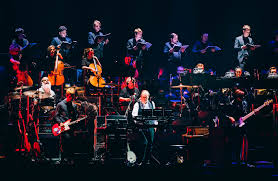
Imagination as Responsibility
Zimmer has often spoken about scoring not what’s on screen, but what’s between the frames. That idea reframes composition entirely.

Imagination, in this sense, becomes a responsibility. The composer isn’t decorating a story—they’re revealing its subconscious.

This is why Zimmer’s music often feels like it’s remembering something you’ve never lived, or mourning something you can’t quite name. It taps into shared emotional memory rather than personal experience. That only happens when imagination is allowed to lead instead of technique.
Why This Matters Beyond Film
Zimmer’s approach is a reminder that imagination isn’t childish—it’s foundational.

In music.
In art.
In business.
In culture.

Technique without imagination produces competence.
Imagination without technique produces chaos.
But when the two meet, something timeless happens.

Zimmer doesn’t chase perfection. He chases possibility. And in doing so, he reminds us that the most powerful creative tool we have isn’t software, instruments, or credentials—it’s the courage to imagine what doesn’t yet exist and trust it long enough to make it real.
In the end, Hans Zimmer’s greatest composition isn’t your run of the mill score-
It’s a philosophy:
If you can imagine it deeply enough, the world will eventually hear it.

Nora Becker
September 8, 2015 at 9:17 amThanks for sharing your ideas in such a straight forward way. Your work is so appreciated worldwide!
Martin Saward
September 8, 2015 at 9:25 amReally inspirational read, thank you!
Carol Thorn
September 8, 2015 at 9:30 amAdorably charming! You have an amazing eye for beauty – these photos are so pretty!
admin
September 8, 2015 at 9:54 amThanks on those nice words, we really appreciate it.