Speed, Confidence, and a Presence the Game Had Never Seen
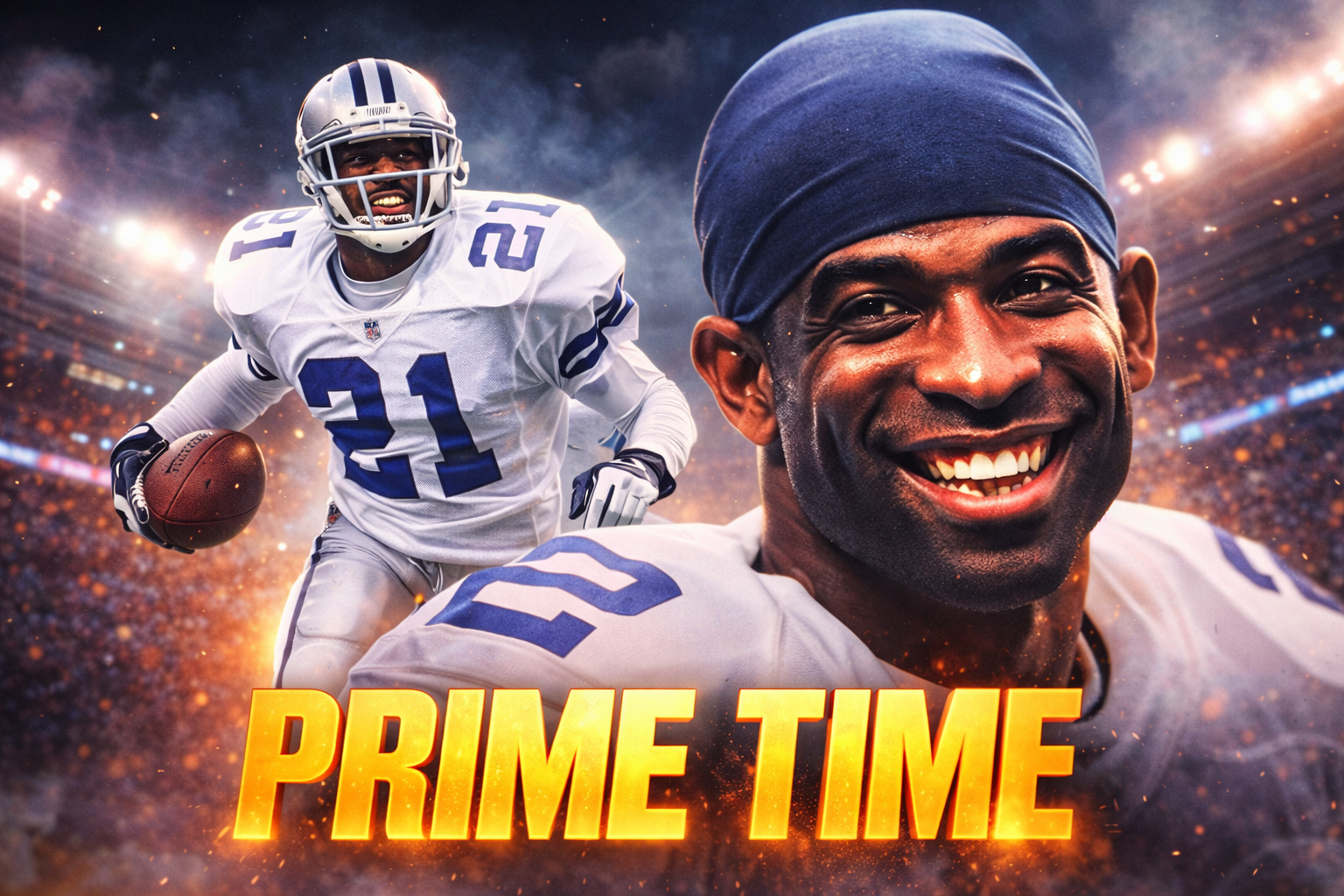
Before football started talking about branding, Deion Sanders already understood something most players didn’t: the game is as mental as it is physical.

Prime didn’t announce himself with noise. He didn’t force attention. He simply walked onto the field looking like he belonged there — and played like it-as a true freshman at Florida State University.

The long socks.
The elbow pads.
The relaxed stride before the snap.

None of it felt random. It felt settled. Like someone who knew exactly who he was. Primetime was born.
Swag Didn’t Come From Talking — It Came From Knowing
Deion’s confidence wasn’t loud. It was calm. And that calmness is what made people uncomfortable.

At cornerback, panic shows. Fear shows. Doubt shows. Deion showed none of it.

He lined up loose, almost casual, because he trusted his God-given speed and his instincts. He knew he could give up ground and still close. He knew he could bait throws and recover. That certainty changes how an opponent plays. Receivers start pressing. Quarterbacks hesitate. Mistakes follow.

That’s where the swag lived — always in control.
Fort Myers Speed Built Different
Deion’s speed didn’t come from a stopwatch. It came from environment.

Fort Myers, Florida doesn’t produce polished athletes — it produces fast ones. Heat, open space, and competition force you to learn early whether you can run or not. There’s no hiding. There’s no easing into it.

That kind of speed stays with you. It doesn’t look explosive because it doesn’t have to. It looks effortless. Deion could glide, coast, high step, run backwards  and still be the fastest player on the field. That’s why he always looked comfortable. Speed gave him margin, and margin gave him confidence.
The Look Was Part of the Message
Deion’s appearance mattered, but not in a costume sense. It was intentional without being performative.

The long socks made him stand out.
The elbow pads added a throwback toughness.
The posture said he wasn’t overwhelmed by the moment.

If you look good, you feel good. If you feel good, you play good. If you play good, they PAY good. -Deon Sanders

Football hadn’t seen many defenders who cared about how they looked and dominated consistently. Style usually followed success. Deion brought style with him and let performance confirm it.

That combination stuck.
Prime Time Was Strategy, Not Ego
“Prime Time” wasn’t just a nickname — it was positioning.

Deion understood that if you lean into the spotlight, it stops feeling heavy. Instead of shrinking when expectations grew, he expanded. Big games didn’t make him tense; they sharpened him.

He played better when it mattered because pressure never felt unfamiliar. He had already accepted it. That’s a different kind of confidence — one built on preparation and self-belief, not hype.
Why It All Worked
Deion never chased swagger. He chased excellence and trusted what he brought to the field.

The swag people remember was a byproduct of that trust. It showed up in the way he moved, the way he waited, the way he didn’t rush moments that rushed everyone else.

Real swag doesn’t announce itself. It’s felt.
The Avenue Take
Deion Sanders didn’t change football by being loud. He changed it by being sure.

He showed the game that confidence could be visible without being forced, that style didn’t weaken credibility, and that when speed, belief, and preparation line up, the game has to adjust to you.

Prime Time didn’t need permission.
He already knew he belonged.






Nora Becker
September 8, 2015 at 10:16 amThanks for sharing your ideas in such a straight forward way. Your work is so appreciated worldwide!
Martin Saward
September 8, 2015 at 10:18 amReally inspirational read, thank you!
Carol Thorn
September 8, 2015 at 10:18 amAdorably charming! You have an amazing eye for beauty – these photos are so pretty!
admin
September 8, 2015 at 10:21 amThanks on those nice words, we really appreciate it.